# A New Step in the Fight Against Measles
**Author:** CryoSPARC Team
**Published:** June 5, 2026
**Category:** Discoveries
**Tags:** structural-biology, cryosparc, discoveries, cryo-em
**Summary:** How Cryo-EM allows a closer look at the Human neutralizing antibodies targeting the measles virus
**Source:** https://cryosparc.com/blog/measles
---
## How Measles Shaped Human History
We as humans have been affected by the devastating effects of measles for much of our history. The earliest known written description of measles dates back to around the year 900 [1], with large epidemics documented from the seventeenth century onwards and the virus becoming fully endemic in many parts of the world by the 1800s. As the global population expanded and cities became increasingly crowded, outbreaks grew more frequent and the disease developed a clear seasonal pattern [2]. Large-scale vaccination campaigns began in 1963 with a live-attenuated vaccine, which is nowadays administered in the Measles-Mumps-Rubella (MMR) vaccine combination [1]. Given the virus’s low antigenic diversity throughout its history in humans, the vaccines developed decades ago remain highly effective against strains circulating today.
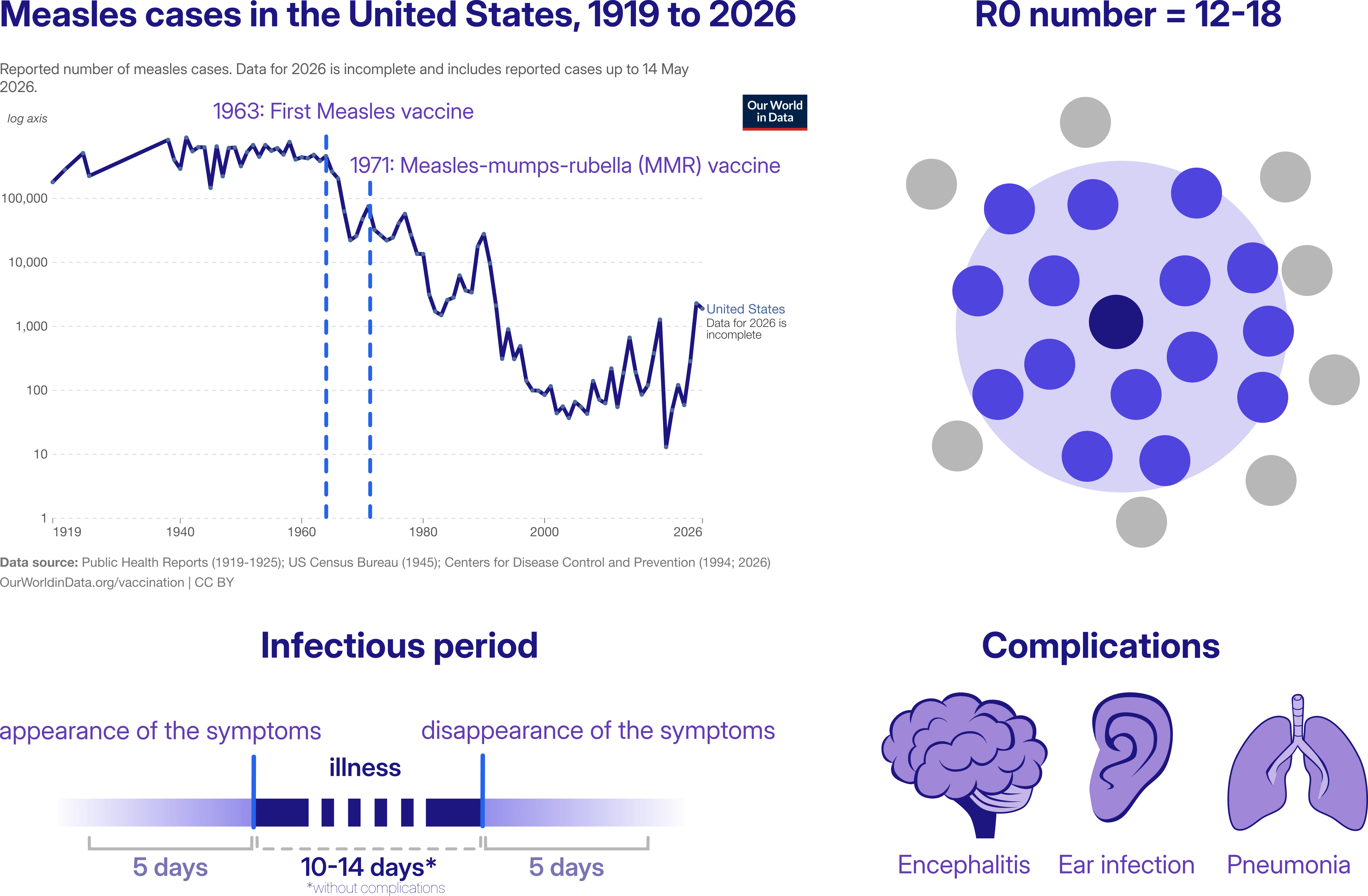
How do measles outbreaks still occur? With an estimated basic reproductive number (R0) of 12–18, measles is among the most contagious infectious diseases known [3]. An infected person can spread the virus from roughly five days before symptoms appear until five days after they disappear, and the virus can remain infectious in the air for up to two hours after the infected person has left the room. For unvaccinated individuals, avoiding infection can therefore be extremely difficult. Top left panel adapted from Saloni Dattani (2025) [4].
**Measles infection can cause severe respiratory and neurological complications, some of them fatal. In addition, the virus can induce “*immune amnesia*”, a state of immunosuppression that can last from weeks to years after the acute infection** [5]. In effect, the virus can erase part of the immune system’s memory, leaving the body more vulnerable to secondary infections long after recovery from measles itself.
## History Being Made Today
In the light of this premises, research to understand this disease is still very current, and a new study published in *Cell Host & Microbe* sheds light on how human antibodies recognize and neutralize the measles virus (MeV) [6]. **The authors isolated the first structurally characterized panel of fully human monoclonal antibodies targeting the virus’s two major surface proteins: hemagglutinin (H) and fusion (F).**
**The H protein is a single-pass transmembrane protein responsible for viral attachment to host-cell receptors**, including SLAMF1 (or CD150) and nectin-4. The F protein is a metastable class I fusion trimer composed of disulfide-linked F1 and F2 subunits. Following receptor engagement by H, **the F protein undergoes extensive structural rearrangements that drive membrane fusion and viral entry into the host cell**.
To investigate how the human immune system targets these proteins, the authors isolated monoclonal antibodies from peripheral memory B cells of a vaccinated 56-year-old woman. They then determined the cryo-EM structures of antibody–H and antibody–F complexes: together, **these structural studies provide a detailed view of the distinct mechanisms by which antibodies can neutralize measles virus infection.**
More specifically, the cryo-EM data revealed two major modes of neutralization:
- The most protective anti-H antibodies block the receptor-binding site or the H-F interaction, preventing MeV attachment to host cells;
- The most potent anti-F antibodies stabilize the prefusion form of the F protein, preventing the structural rearrangements required for membrane fusion.
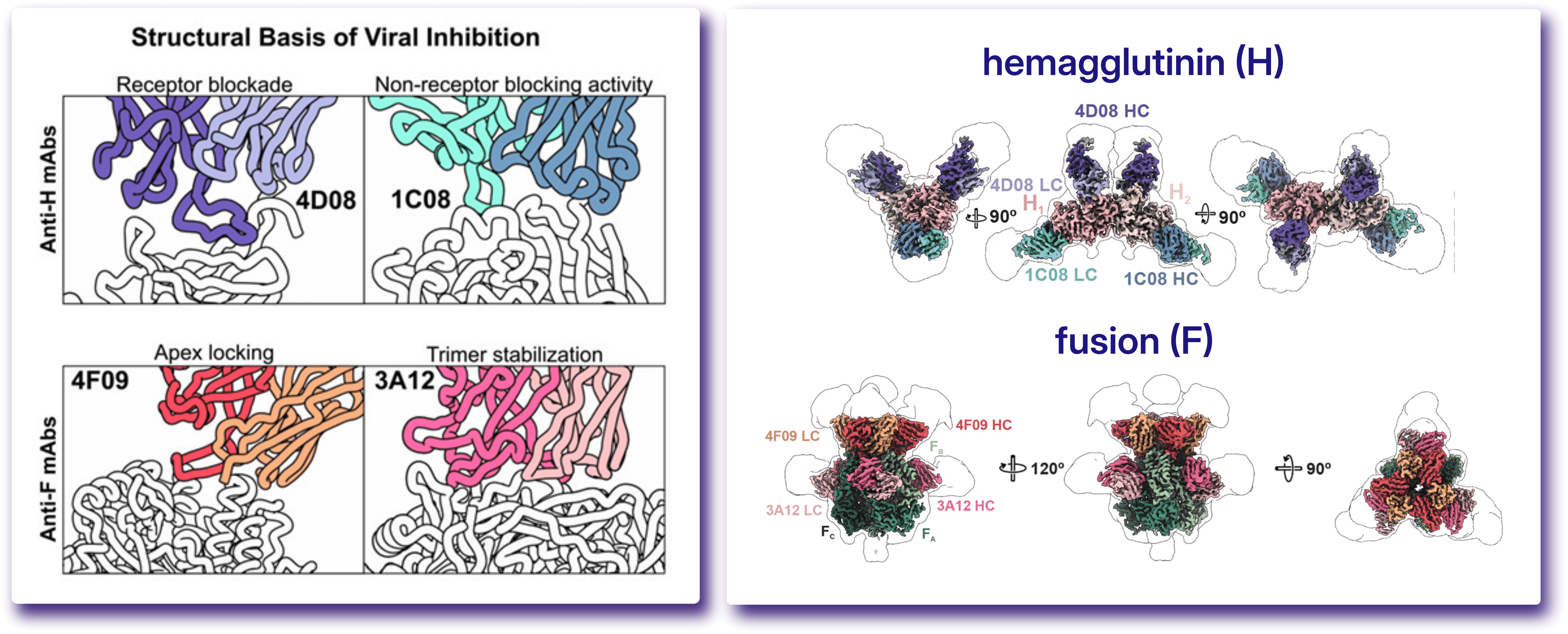
The cryo-EM structures were solved using CryoSPARC™. Figure adapted from Acciani et al. 2026 [6].
Cryo-EM data revealed that the H ectodomains retain their conserved homodimeric organization. In structures bound to the monoclonal antibodies 4D08 and 1C02, these antibodies symmetrically engage epitopes on the apical surface of each H monomer (HE-1b and HE-1a, respectively), directly occluding the SLAMF1-binding groove, consistent with inhibition of viral attachment to host cells. A third antibody, 1C08, targets the peripheral HE-4 epitope. Although it does not directly block receptor binding, structural modeling suggests that it may interfere with the interaction between H and F required to trigger membrane fusion. **Together, these structures capture two distinct stages of the viral entry process: receptor binding inhibition by 4D08 and 1C02, and disruption of H–F communication by 1C08.**
The most potent anti-F antibodies, 3A12 (targeting FE-4) and 4F09 (targeting FE-5), revealed yet another neutralization strategy. The cryo-EM structure of the F-3A12 complex show binding of the antibody to the center of each protomer face (F1/F2 subunits); the antibody 4F09 binds the trimer apex, engaging two protomers simultaneously. The 2.3 Å cryo-EM structure is the ternary F–3A12–4F09 complex, with three copies of each Fab per F trimer. **By effectively anchoring the prefusion trimer in place, these antibodies prevent the large conformational changes required for membrane fusion, thereby blocking viral entry.**
## Integrative Approaches Towards the Next Steps against Measles
These cryo-EM structural studies were complemented by an extensive set of *in vitro* and *in vivo* experiment, revealing not only high-resolution details of the mechanisms targeted by the isolated antibodies, but also their remarkable therapeutic potential. **The characterization of these fully human mAbs provides avenues for prophylactic or therapeutic intervention against re-emerging MeV, and may therefore prove especially valuable for vulnerable populations, including immunocompromised individuals and infants too young to be vaccinated**.
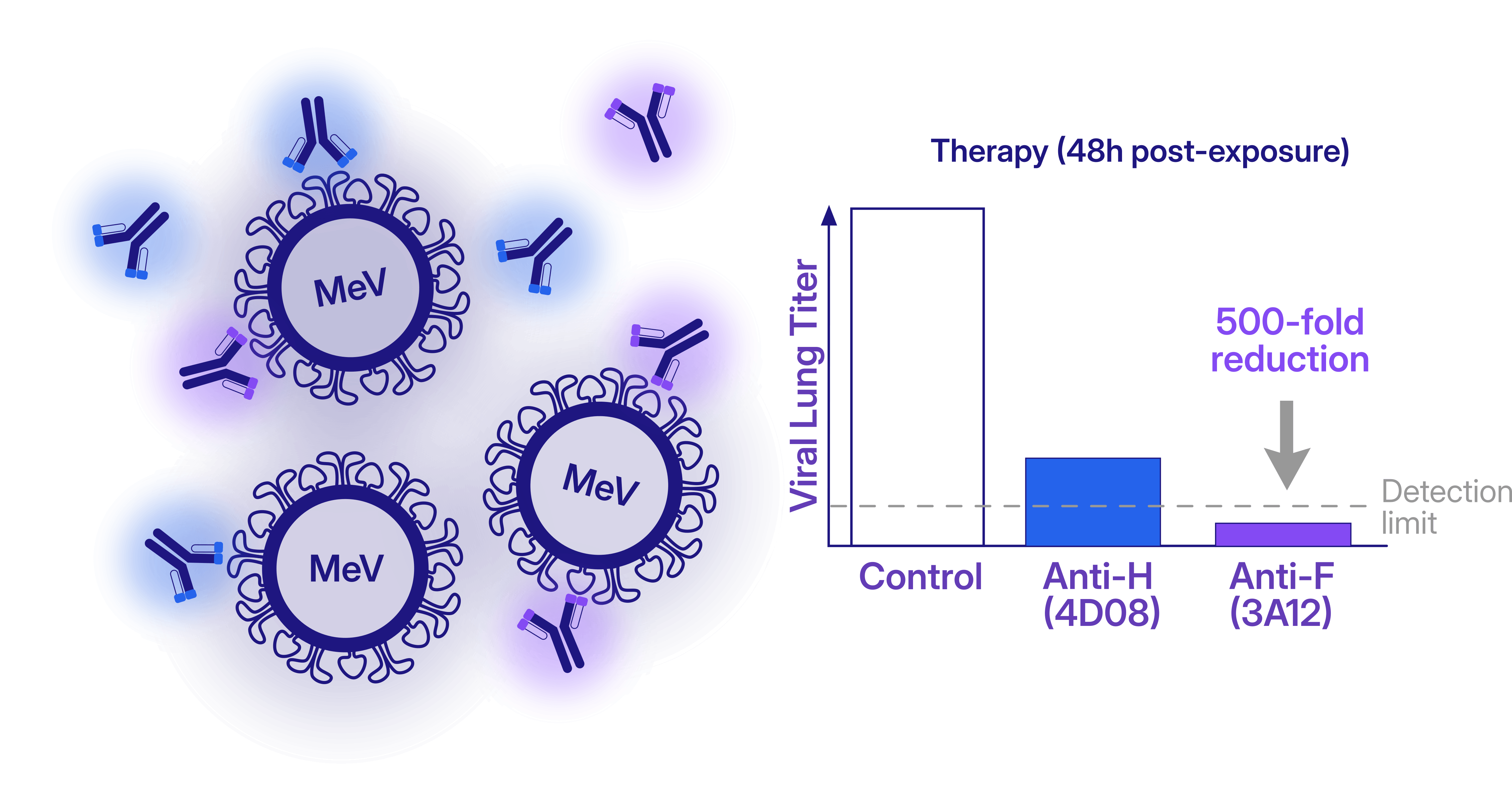
The identified mAbs showed both prophylactic and therapeutic efficacy in cotton rats. When administered 24 to 48 hours post-infection in animal models, the antibodies significantly reduced viral lung titers, highlighting a promising window for post-exposure treatment. Figure adapted from Acciani et al. 2026.
Together, these findings present an elegant example of how integrative structural biology can bridge molecular mechanisms and therapeutic development. By combining cryo-EM, immunology, virology, and animal studies, the work provides both a detailed mechanistic understanding of measles virus neutralization and a framework for the development of next-generation antiviral strategies.
At a time when measles outbreaks continue to re-emerge worldwide despite the availability of effective vaccines, studies like this demonstrate the power of structural and computational approaches to guide not only our understanding of viral infection, but also the design of future interventions.
#### References
- "Chapter 13: Measles". Pink Book Epidemiology and Prevention of Vaccine-Preventable Diseases. U.S. Centers for Disease Control and Prevention (CDC). 24 April 2024
- Black, F. L. (1966). Measles endemicity in insular populations: critical community size and its evolutionary implication. Journal of theoretical biology, 11(2), 207-211.
- Guerra, F. M., Bolotin, S., Lim, G., Heffernan, J., Deeks, S. L., Li, Y., & Crowcroft, N. S. (2017). The basic reproduction number (R0) of measles: a systematic review. The Lancet Infectious Diseases, 17(12), e420-e428.
- Saloni Dattani (2025) - “Measles leaves children vulnerable to other diseases for years” Published online at OurWorldinData.org. Retrieved from: https://archive.ourworldindata.org/20251125-173858/measles-increases-disease-risk.html [Online Resource] (archived on November 25, 2025).
- Mina, M. J., Metcalf, C. J. E., De Swart, R. L., Osterhaus, A. D. M. E., & Grenfell, B. T. (2015). Long-term measles-induced immunomodulation increases overall childhood infectious disease mortality. Science, 348(6235), 694-699.
- Acciani, M., Zyla, D., Niemeyer, G., Harkins, S., Parekh, D., Pawlack, E., ... & Saphire, E. O. (2026). Human neutralizing antibodies targeting the measles virus hemagglutinin and fusion surface proteins. Cell Host & Microbe.