Digging Deeper: Particle Curation using Decoy Classification
Particle cleanup does not always have to happen in 2D. Decoy classification uses Heterogeneous Refinement in CryoSPARC to curate particles directly in 3D, providing a flexible strategy for separating junk, preserving underrepresented views, and distinguishing different particle populations.
Particle cleanup is a critical step in cryo-EM data processing, but distinguishing particles of interest from junk while preserving valuable, underrepresented views can be challenging. In this post, we explore decoy classification as a strategy for performing this curation step in 3D using Heterogeneous Refinement in CryoSPARC.
What is Decoy Classification?
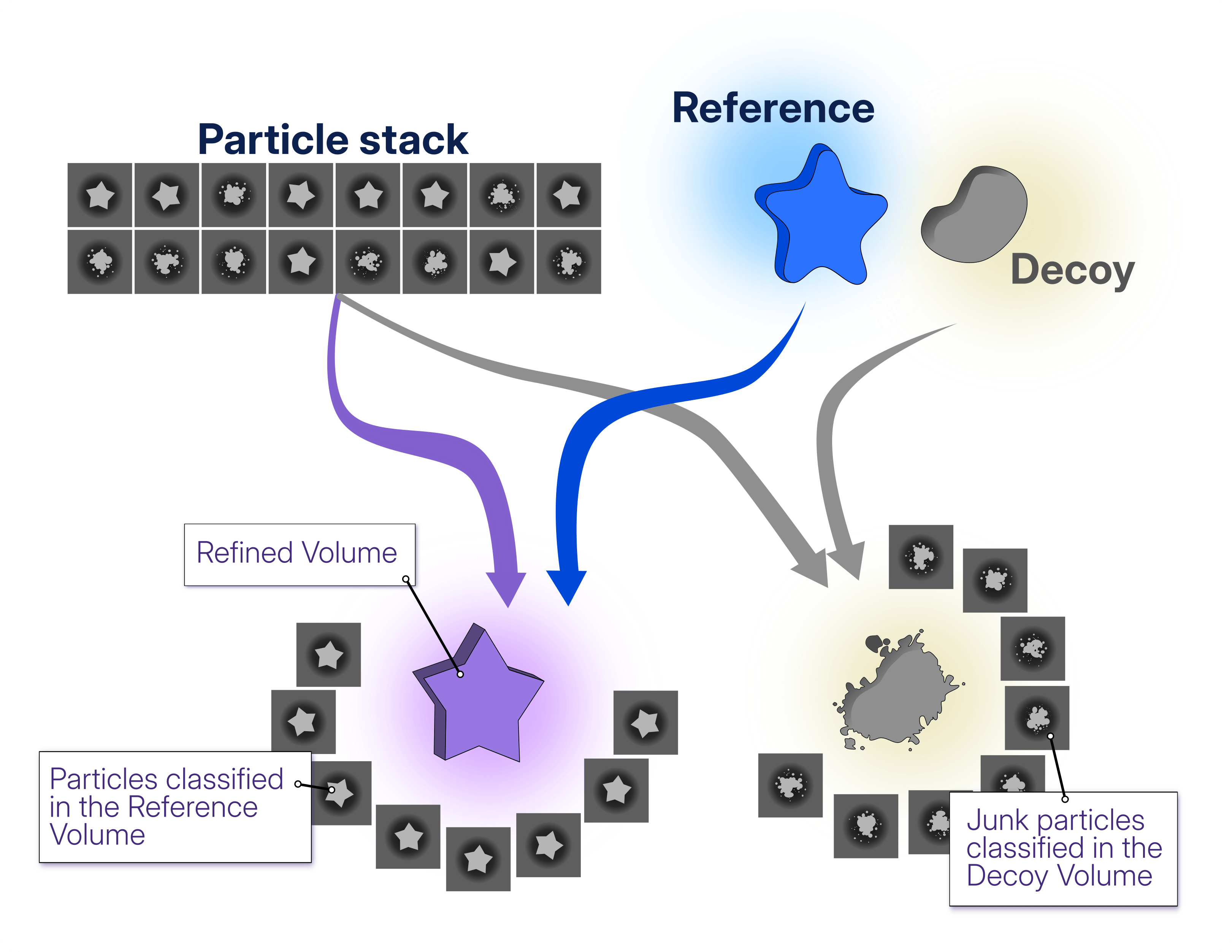
Decoy classification is a 3D particle-curation strategy that uses Heterogeneous Refinement as a particle cleanup step, classifying particles against reference volumes and decoy volumes. Reference volumes are usually a lowpass filtered version of the target molecules that we are trying to study in cryo-EM, while decoy volumes are random junk volumes that don't need to look like anything in particular, and don't even need to come from the same dataset (more on that later).
The strategy takes advantage of Heterogeneous Refinement's ability to simultaneously assign particles to 3D classes while refining their poses. During this process, particles are evaluated against the different input volumes, and the input volumes evolve based on the signal in the particles.
Therefore, during decoy classification:
- The decoy volumes "attract" unwanted particles, capturing junk and noisy picks and separating them from particles that are more consistent with the reference volume.
- Good particles are retained based on their consistency with the reference volume, and the volume is refined at the same time, further increasing the consistency between the good particles and the reference over iterations.
This ability to curate particles in 3D can be particularly valuable when underrepresented views are difficult to retain through 2D curation.
Why might I use decoy classification instead of 2D curation?
When a dataset contains underrepresented views, particle cleanup through 2D Classification can inadvertently increase orientation bias. Particle images representing rare views may form noisier classes that are difficult to distinguish from junk, increasing the risk of discarding valuable particles during manual selection.
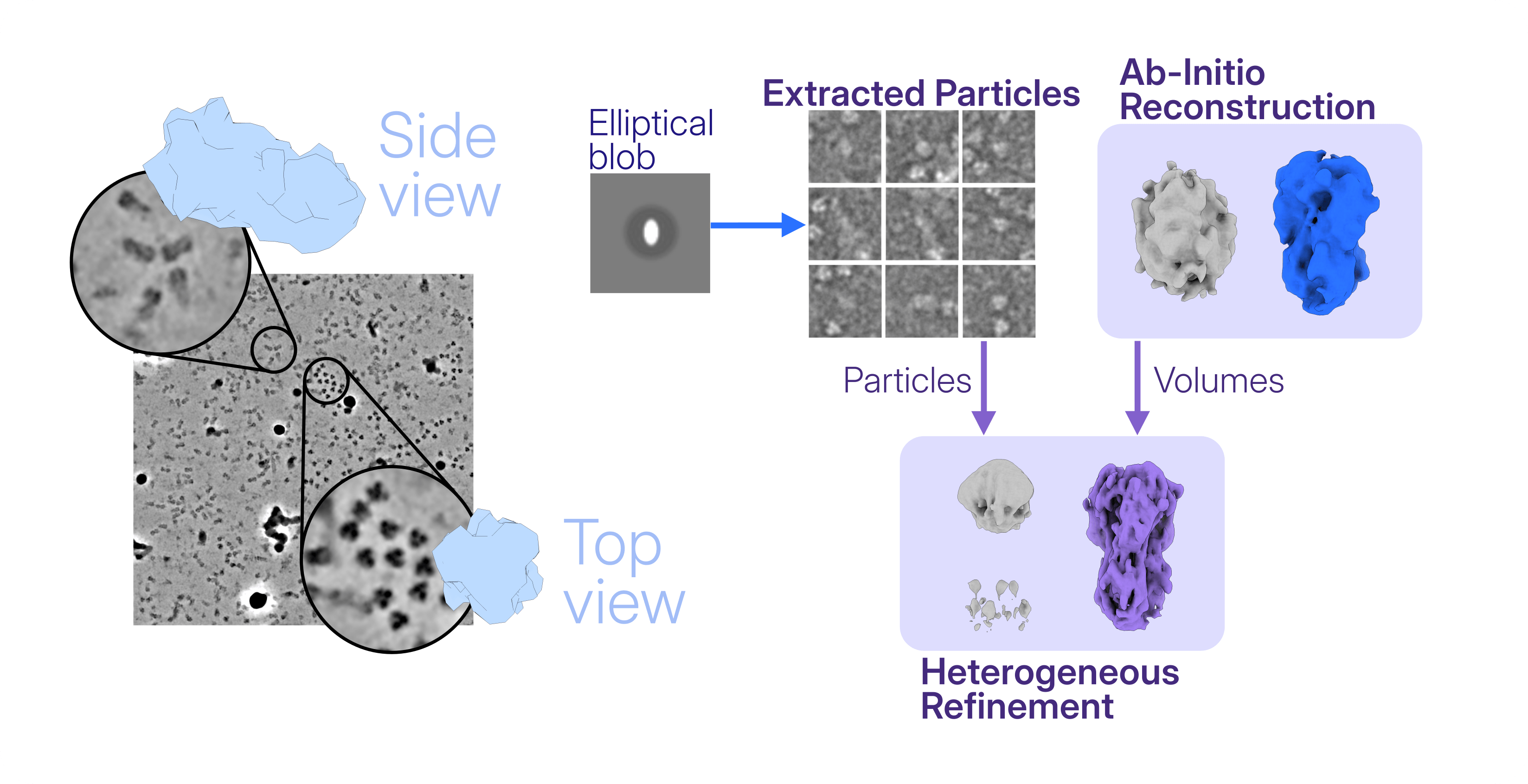
In the case study Picking-induced Orientation Bias in HA Trimer (EMPIAR-10096 and -10097), decoy classification was explored for an untilted dataset affected by picking-induced orientation bias. Rather than applying 2D Classification to the full picked particle stack to remove junk particles, the particles were curated in 3D using Heterogeneous Refinement, helping retain rare views that could otherwise be lost during 2D class selection. As shown in the Skipping 2D Classification section of the case study, the resulting map showed better connectivity than the map obtained after 2D curation, with dimensions closer to those of the map reconstructed from the tilted dataset.
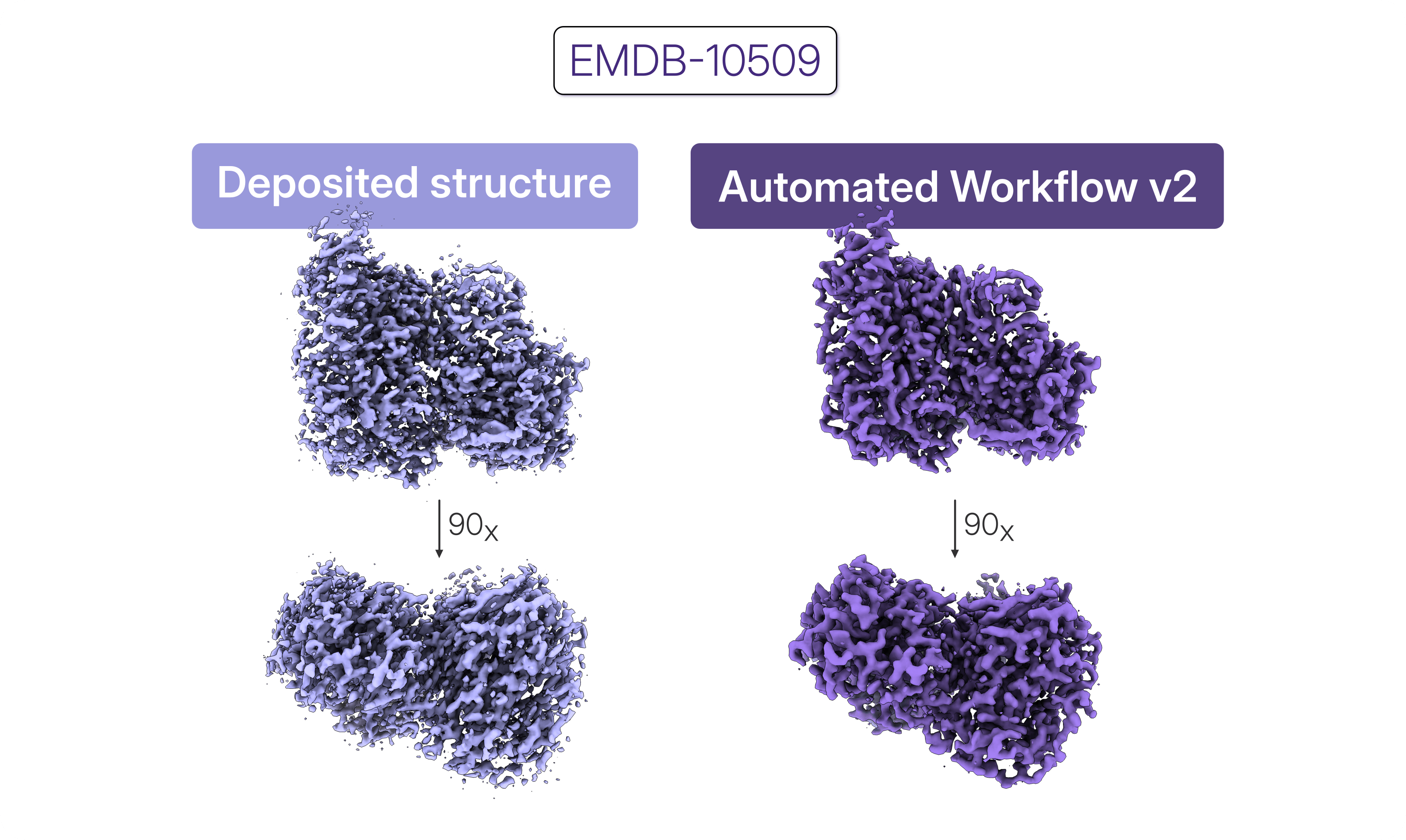
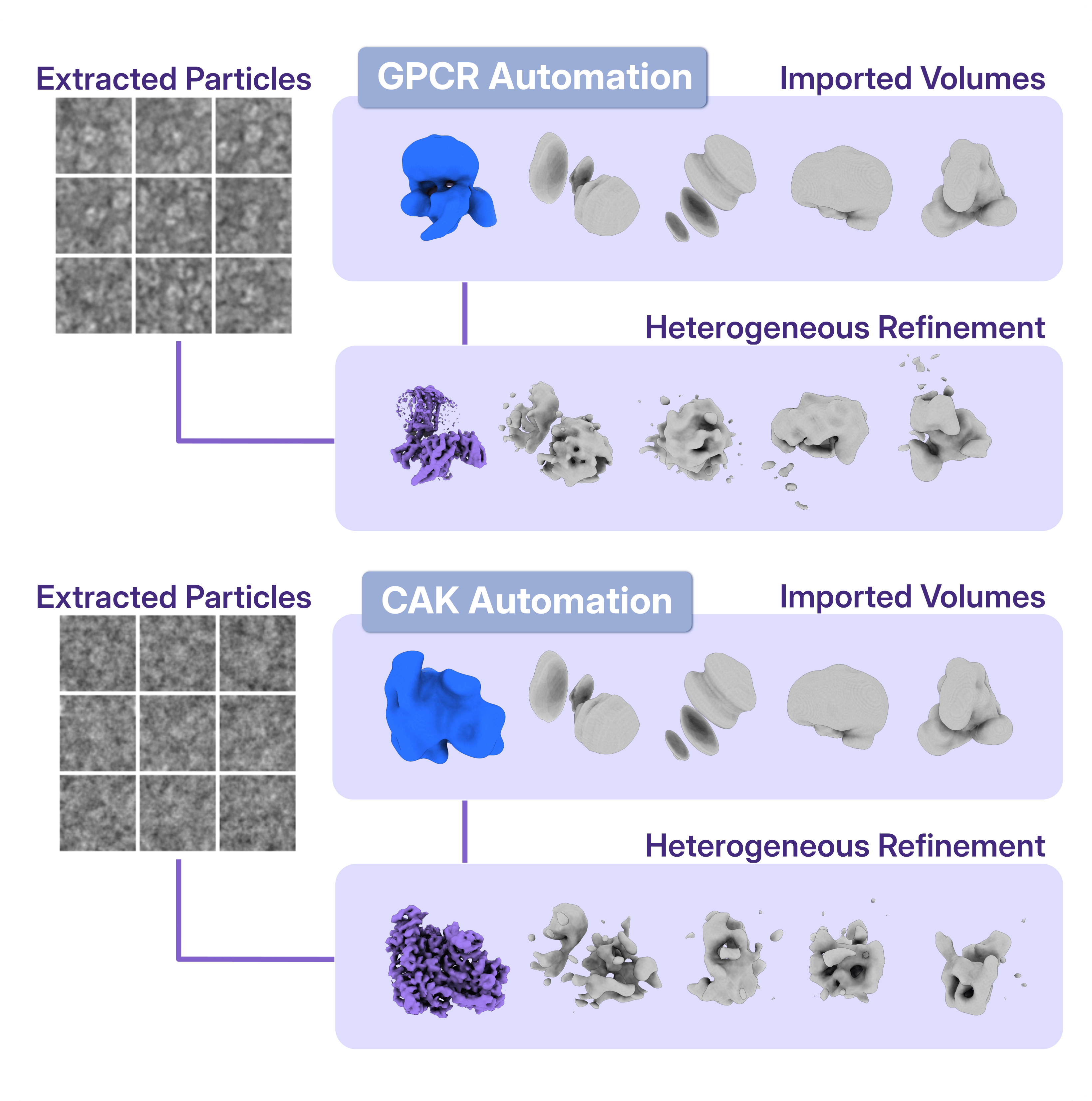
The Advanced automated data processing: a case study using CAK provides another example of using decoy classification to replace 2D particle curation. The CAK datasets presented strong preferred orientation, making it particularly important to preserve the underrepresented views present in the picked particle stack. An imported reference volume was used to generate templates for Template Picker, after which the extracted particles were curated directly in 3D through decoy classification using the reference alongside imported junk volumes. Combined with Rebalance Orientations to increase the contribution of underrepresented views during downstream refinement, this strategy avoided relying on 2D class selection for particle cleanup and resulted in reconstructions with improved map quality and interpretability compared with the workflow based on 2D Classification and curation.
Can decoy classification do more than separate particles from junk?
While the examples above focus on separating particles from junk using only one reference volume, decoy classification can also be used to distinguish different particle populations while separating junk. Multiple reference volumes representing distinct particle populations can be included alongside the decoy volumes, allowing Heterogeneous Refinement to perform particle cleanup and classification within the same step.
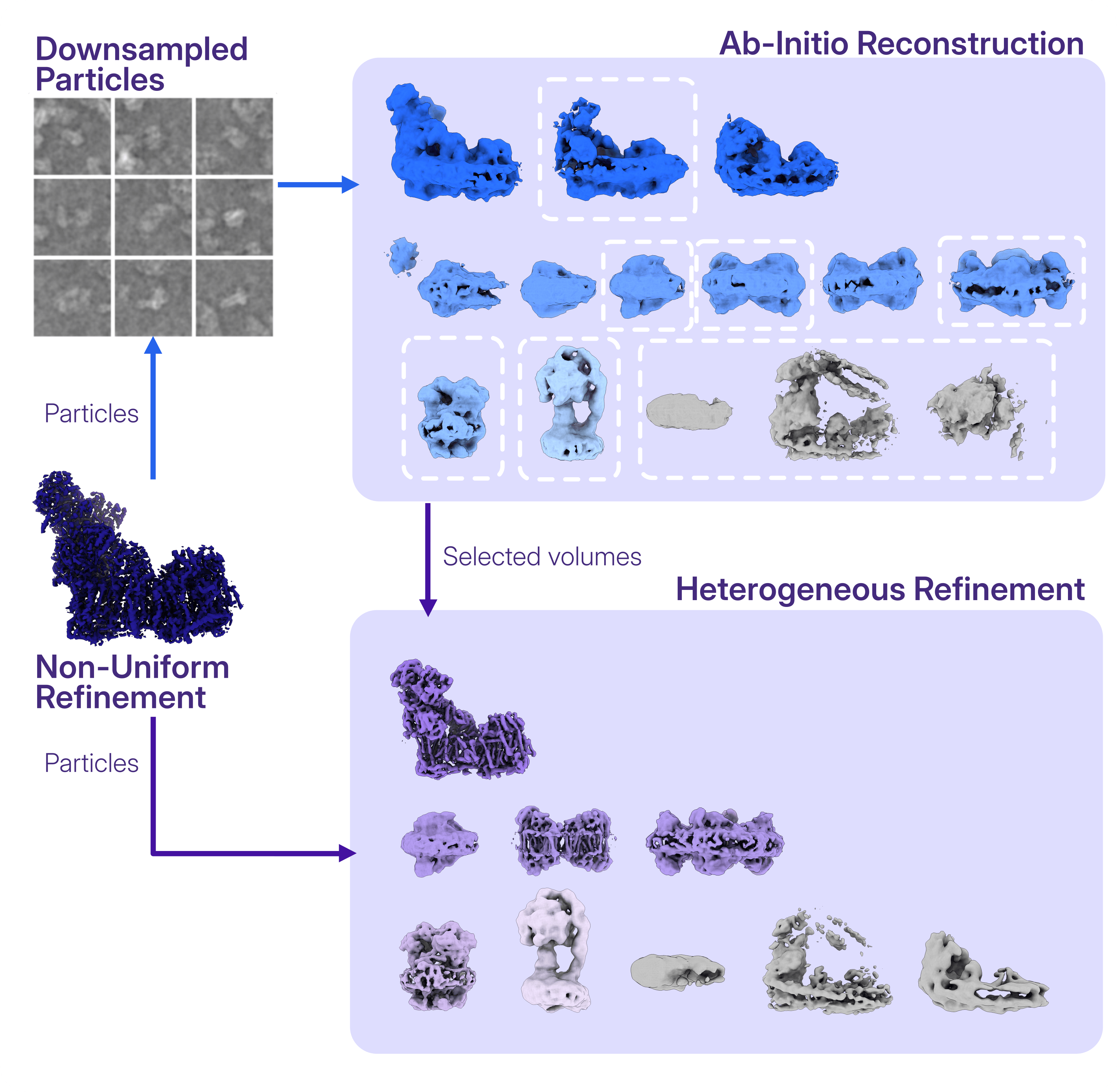
As reported in the case study Discrete heterogeneity in a sample of Acetogenin-bound complex I (EMPIAR 10927), Heterogeneous Refinement was one of the strategies used to handle the discrete heterogeneity discovered through a multi-class Ab-Initio Refinement. In this case, all the particles from the first consensus refinement were classified against only one volume per useful species of the mitochondrial complexes, and three additional junk volumes were used to get rid of the junk particles.
How Do I Choose and Generate Volumes for Decoy Classification?
Here we have seen some examples of what the decoy classification strategy can accomplish, now what do we actually need to run it?
The number and type of input volumes depend on the dataset and the specific particle-curation problem. In many cases, three to five decoy classes can provide sufficient capacity to capture different junk populations, while the number of reference classes depends on the expected compositional heterogeneity of the sample.
What Resolution Should the Input Volumes Be?
The input volumes also do not need to contain high-resolution structural information. In fact, in Heterogeneous Refinement, the Initial Resolution (Å) parameter is set to 20 Å by default, and determines the initial low-pass filtering applied to the input volumes before refinement begins. The reference volume only needs sufficient structural information to support reliable particle alignment and classification, while keeping the decoy volumes at low resolution allows them to accommodate a broader range of noisy and junk particle populations.
The reference and decoy volumes can hence be at relatively low resolution (~15 Å is enough) and can be generated quickly from relatively small particle subsets, making the setup for decoy classification efficient.
Where Can the Volumes Come From?
Here are three practical approaches to generate and/or choose volumes for decoy classification.
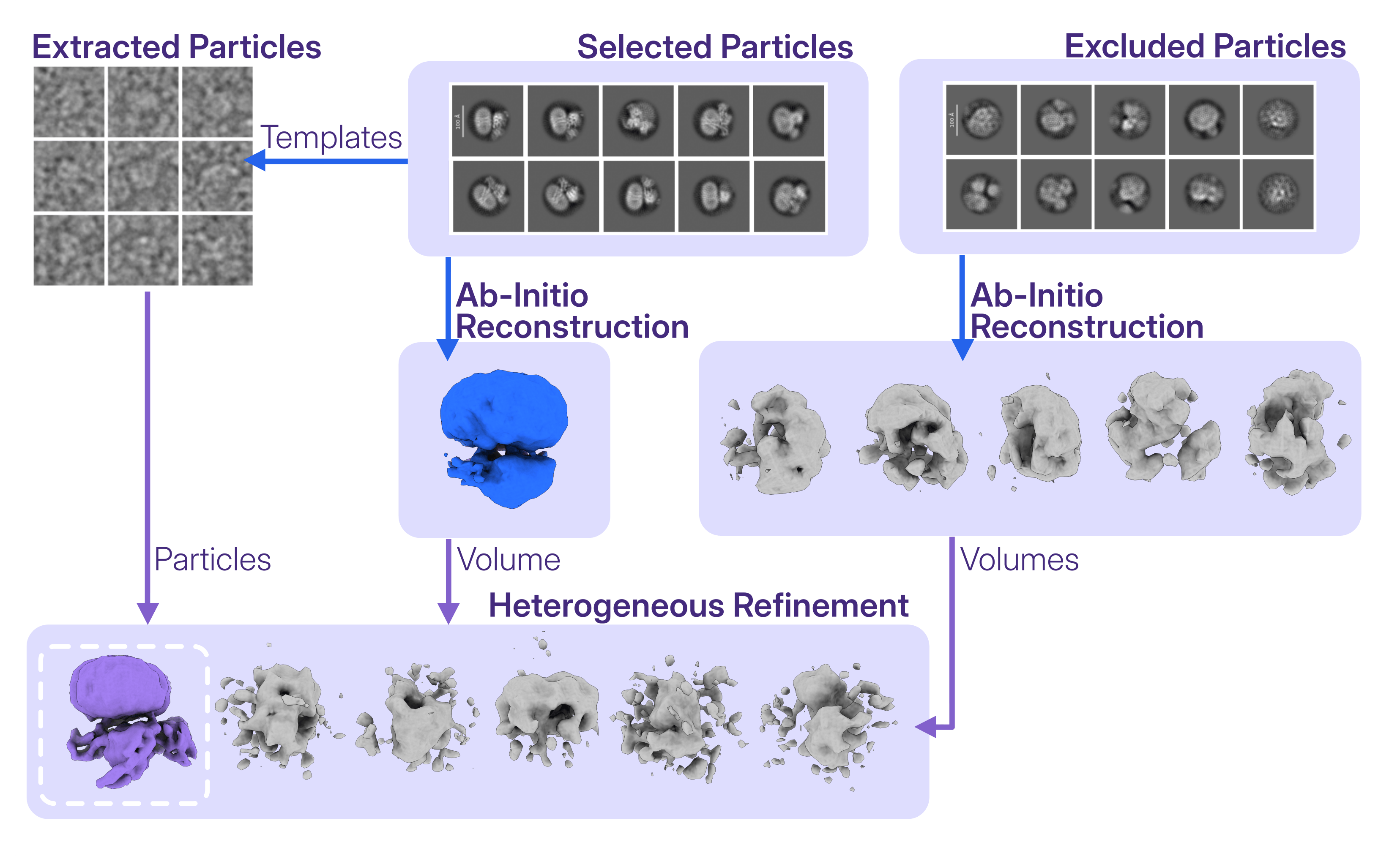
Option 1: Generating reference and decoy volumes after 2D Classification
Rather than using 2D Classification as particle curation step, it can be used on a subset of particles to generate the initial reference and decoy volumes. A relatively small subset, typically around 20,000 particles, is often sufficient to generate one reference volume with Ab-Initio Reconstruction (e.g. Num particles to use: 20000).
The excluded particles can then be used to generate several decoy volumes. Since these volumes do not need to accurately represent a specific structure, but rather serve to accommodate a broad range of junk particles, they can be generated from fewer particles and using Ab-Initio Reconstruction parameters optimized for lower resolution and faster convergence. Some users also opt to terminate this Ab-initio Reconstruction job soon after starting it, and then mark the job as completed, allowing the volumes reconstructed up to that point to be used in downstream jobs.
Option 2: Generating reference and decoy volumes from multi-class Ab-Initio Reconstruction
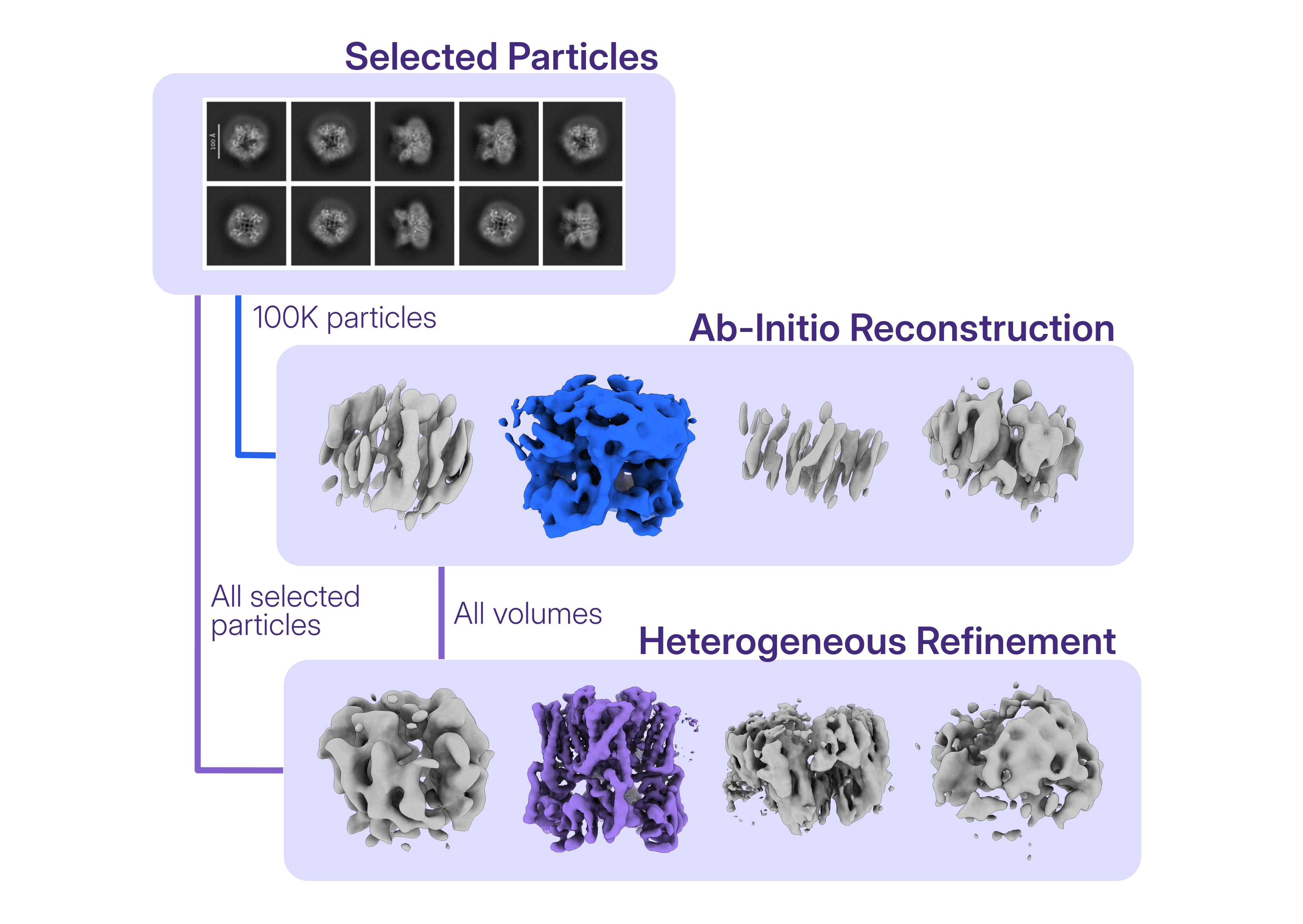
Alternatively, all reference and decoy volumes can be generated together using a single multi-class Ab-Initio Reconstruction job. The resulting volumes can then be used together as inputs for decoy classification, with classes resembling the structure of interest serving as references, and lower-quality or poorly resolved classes serving as decoys.
In the case study DkTx-bound TRPV1 (EMPIAR-10059), the input volumes for decoy classification were generated by running Ab-Initio Reconstruction with four classes on a subset of the particles (in this case Num particles to use: 100000), reducing the computational time of generating the initial models. All four resulting volumes were then used as inputs to Heterogeneous Refinement, where classification and pose refinement of the full particle stack provided a more effective separation of the particle populations.
Option 3: Using/importing an existing set of volumes instead of generating new ones
Reference and decoy volumes do not always need to be generated as part of the current workflow. When suitable volumes are already available, a known reference can be imported and used alongside previously generated decoy volumes.
In particular, decoy volumes can be reused across different processing workflows when appropriate for the dataset and classification problem. Since the input volumes are initially low-pass filtered and the decoys are not intended to represent a specific junk structure in detail, previously generated junk volumes can provide suitable starting points for capturing noisy and unwanted particle populations. During Heterogeneous Refinement, these volumes are updated as particles are assigned and their poses refined, allowing the decoy classes to evolve according to the particle populations present in the current dataset.
Taking Particle Cleanup into 3D with Decoy Classification
Particle cleanup does not necessarily have to happen in 2D. Decoy classification with Heterogeneous Refinement provides a flexible strategy to curate particles directly in 3D, helping separate unwanted particles while preserving valuable views and, when needed, simultaneously distinguishing different particle populations. With several options for generating, choosing, or reusing the input volumes, the strategy can be adapted to different datasets and processing challenges.
For more examples of decoy classification in practice, explore data processing workflows on the CryoSPARC blog, including: